
Indonesia: The history of an archipelago
Indonesia's history developed across an extensive archipelago connected by maritime trade and migration. Historical kingdoms established important political and commercial centres long before European colonial expansion. The region's subsequent incorporation into the Dutch East Indies and the emergence of the independent Indonesian republic shaped its modern political development.
Begin with the history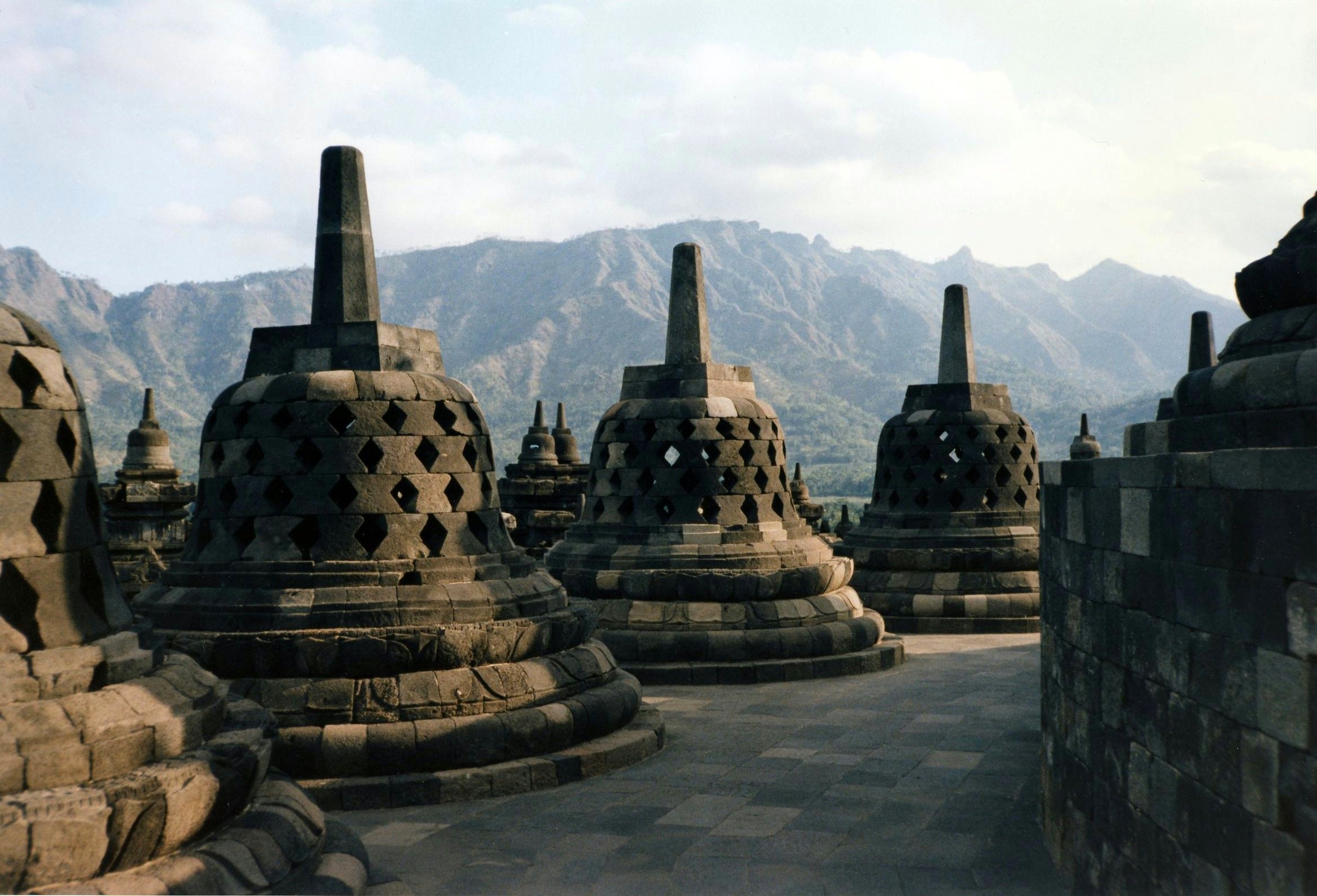
Historical overview
The Indonesian archipelago has a long history of maritime exchange and the development of regional kingdoms.
The Buddhist monument of Borobudur and the Hindu temple complex of Prambanan provide evidence of powerful cultural and political traditions in central Java during the eighth and ninth centuries.
Other historical states developed across the archipelago, including maritime centres associated with Sumatra and the eastern islands.
Dutch colonial expansion gradually brought much of the archipelago under the administration of the Dutch East Indies.
Indonesia proclaimed independence in 1945, followed by the transfer of sovereignty from the Netherlands in 1949.
The people of Indonesia
Indonesia is home to numerous communities with distinct languages and historical traditions.
Javanese and Sundanese communities have long histories on Java, while Sumatra is associated with societies including the Minangkabau, Batak and Acehnese.
Kalimantan is home to numerous Dayak communities, alongside other populations with established histories of settlement and trade.
These communities developed distinct cultural traditions within an archipelago shaped by extensive movement between islands.
Cultural heritage and traditions
Indonesia's cultural heritage includes traditions that developed through religious exchange and regional artistic practices.
Batik is associated with established textile-making traditions and remains an important form of cultural expression.
Wayang puppet theatre and traditional dance are also significant elements of Indonesian performing arts.
The country's historical monuments document the development of Buddhist and Hindu traditions, particularly in central Java.
Historical places and landmarks
Borobudur in central Java is a Buddhist monument constructed during the eighth and ninth centuries under the Śailendra dynasty.
The nearby Prambanan temple complex preserves monuments associated with Hindu religious traditions.
Other important historical sites can be found across the archipelago, including the colonial mining landscape of Sawahlunto in Sumatra.
These sites provide evidence of Indonesia's religious, political and economic history.
Stories from Indonesia
People · Places · Cultures
Events · Records · Time


PERTEMPURAN DI GUNUNG MADANG (PERANG BANJAR)
Sebagai telah dikemukakan, sesudah bulan Muharram, kegiatan perlawanan melawan dan menggempur Belanda sangat meningkat. Dari selatan ke utara membentang nyala api pertempuran-pertempuran;
Read the story For paid members

Sejarah Perang Banjar
KESULTANAN BANJAR Dari Wikipedia bahasa Indonesia, ensiklopedia bebas Lokasi ibu kota terakhir Kesultanan Banjar tahun 1860 di Martapura, Kalimantan Selatan
Read the story For paid members
Sejarah Kalimantan
Sejarah Kalimantan menggambarkan perjalanan sejarah Pulau Kalimantan dimulai sejak zaman prasejarah ketika manusia ras Austrolomelanesia memasuki daratan Kalimantan pada tahun 8000 SM hingga sekarang. Zaman Prasejarah Bangsa
Read the story For paid membersIndonesia: List of Articles
Compilation of Articles on Indonesia's History
Read the story For paid members
Kesultanan Sulewasi
Sejarah Penghijrahan Orang Melayu Ke Sulawesi (Melayu - Bugis) Orang-orang Melayu (Johor, Minangkabau, dan Patani) yang melakukan penghijrahan ke Sulawesi Selatan sejak tahun 1490. Perantau-perantau ini akhirnya
Read the story For paid membersBorneopedia’s regional entries are in development. The link introduces the knowledge project; a searchable collection is not yet available.